


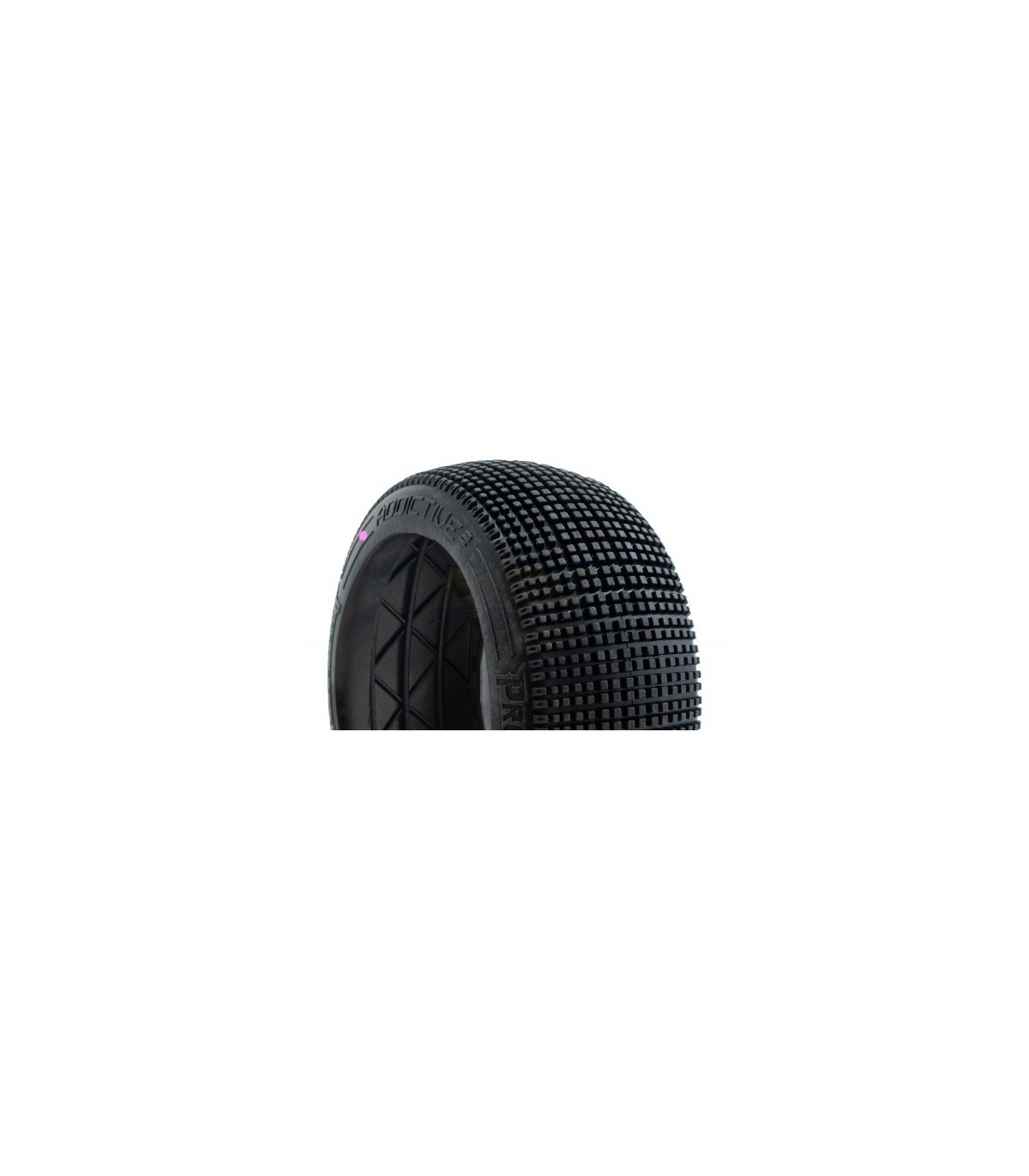


ADDICTIVE v2 BUGGY K1 (CLAY SUPER SOFT) (2 pcs.)
Brand:

This is the ADDICTIVE V2 wheel from PROCIRCUIT. Like its predecessor, this wheel is designed to last even in the most abrasive circuits thanks to its large number of lugs. The small, closely spaced lugs make the Addictive V2 a wheel with a very low wear rate on compacted and polished surfaces, ?blue groove,? or in high wear conditions with a bit of dust that causes the wheels to slip and wear out faster. It offers long-lasting performance, good traction, and easy handling.
The ADDICTIVE V2 is perhaps the wheel that has changed the most compared to its predecessor. While maintaining the large number of lugs, this new design has opted to group them in sets of 4, creating space between some rows of lugs. This spacing between groups of lugs allows them to work better in circuits with a bit of dust, significantly improving the performance of this model in such conditions, without compromising its performance on clean, high-grip tracks.
The V2 series features a new insert to better adapt to the new wheel structure, enhancing overall performance, providing better bump absorption, making jumps easier, and offering a more effortless driving experience.
COMPOUNDS
Available in compounds C1 Super Soft (white), C2 Soft (yellow), C3 Medium (orange), C4 Hard (blue), K1 Clay Super Soft (pink), and K2 Soft (red). The C4, K1, and K2 compounds are only available in the wheel formats without rims.
The K1 and K2 clay compounds from PROCIRCUIT provide maximum efficiency and grip on indoor clay circuits, circuits with oil on the racing line, dirt tracks with high moisture levels, or even mixed circuits that include synthetic surfaces such as carpet, artificial grass, concrete, slippery curves, or cobblestones.
The K compounds function differently from the C compounds. While C compounds are highly dependent on temperature and the grip level of the circuit, the performance of K compounds primarily depends on the grip level of the track and the types of surfaces it contains.
With the K compounds, we achieve greater stability in driving because the rubber is not as elastic, which translates to less centrifugal force on the wheels when turning.
16 other products in the same category:


Reference: T8V
€12.49
Maximize performance on dirt tracks and off-road circuits with the green Bandit compound from 6mik. The T8V tire is designed for 1/8 to 1/10 buggies, offering the perfect balance between grip and durability in...


Reference: TUY162140
€18.90
The MAGMA 2.0 21/40 Ultra tires mounted on a yellow rim from 6mik represent the ideal solution for pilots seeking maximum grip in competition. These tires are designed to deliver exceptional performance on both...


Reference: TU19P
€18.90
The purple synthetic Dash from 6mik is the perfect choice for drivers seeking maximum grip on on-road circuits. Mounted on a yellow wheel, this combination delivers exceptional track performance, with a hardness and...

NEW


Reference: T21B
€12.49
The blue rear tires Wasabi from 6mik are the ideal solution to increase grip during your 1/8 off-road sessions. With an optimized compound and a specific tread pattern, these tires provide superior traction on dirt,...


Reference: T101525
€12.49
The RAPID 15/25º rubber tire from 6mik is the ideal solution for pilots looking to maximize grip and control on off-road surfaces. This tire provides a perfect balance between traction and durability, allowing you to...

Reference: T19P
€12.49
The purple synthetic Dash compound from 6mik is the ideal solution for drivers looking to maximize grip on-road. This rubber compound tire provides exceptional dry traction, allowing for better control in corners and...

Reference: T19B
€12.49
The synthetic Dash blue compound T19B from 6mik is the ideal competition rubber for your Mini-Z or 1/10 on-road car. This medium hardness compound offers the perfect balance between grip and controlled sliding,...


Reference: TUY100018
€18.90
The RAPID 0/18º ultra yellow tire from 6mik is a high-performance glued tire specifically designed for 1/10 on-road circuits. Its ultra yellow compound provides exceptional grip even in low-temperature conditions,...

Reference: TUY16S
€18.90
The MAGMA 2.0 Silver Ultra from 6mik represent the evolution in performance for your 1/10 Off-Road RC. Mounted on high-quality yellow rims, these tires compete at the elite level of national and international...